
TPO Roofing: Why Warner Robins GA Businesses Switch
For many business owners in Warner Robins, the roof is something that stays out of mind until a brown spot appears on the ceiling. However, in the intense environment of Middle Georgia, your commercial roof is much more than just a cover; it is a critical piece of equipment that directly impacts your monthly overhead. If you manage a warehouse near the air force base, a retail center, or a local office building with a flat or low-slope roof, you have likely heard the term "TPO" mentioned by contractors and property managers.
TPO has rapidly become the leading choice for businesses throughout our region because it is specifically designed to solve the two biggest headaches of owning a building in Georgia: the brutal, unyielding summer heat and the constant threat of moisture-driven damage. While older roofing styles struggle to keep up with these demands, TPO offers a modern way to protect your assets while keeping your operating costs under control. Making the switch isn't just about getting a new roof; it’s about upgrading to a system that works with the local climate rather than fighting against it.
In a city like Warner Robins, where the sun can bake a traditional dark roof for ten hours a day, the choice of material matters. Business owners are moving away from old-fashioned, high-maintenance roofs in favor of a solution that reflects heat, resists mold, and stays watertight through the heaviest afternoon thunderstorms.
Breaking Down TPO: What Exactly Is It?
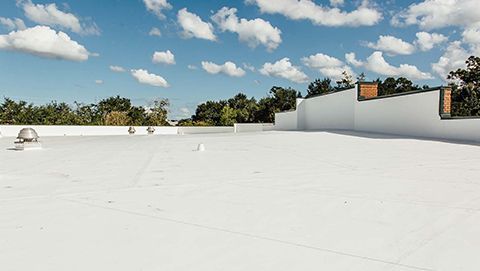
TPO stands for Thermoplastic Polyolefin. While the name sounds like something out of a science lab, you can think of it as a thick, rubber-like white sheet that is rolled out across the surface of your building.
Unlike older roofs that rely on multiple messy layers of felt and hot tar, TPO is a modern material made from a blend of rubber and durable plastics.
- Single Layer Protection: It protects your building with one continuous, reinforced sheet, which means there are fewer layers to fail over time.
- Heat-Welded Seams: Instead of using glue or tape that can dry out and peel, installers use a hot-air tool to melt the seams together. This creates a bond that is actually stronger than the sheet itself, making it nearly impossible for water to seep through.
- Flexible and Strong: TPO is designed to be flexible enough to handle the building's natural movement during temperature changes but tough enough to resist tears and punctures.
Why Warner Robins Businesses Are Making the Switch
The shift toward TPO in Middle Georgia isn't just a trend-it is a practical response to the specific weather challenges we face every year.
1. Drastic Savings on Cooling Costs
Warner Robins buildings often suffer from the "radiator effect," where dark, traditional roofs soak up solar heat and pump it directly down into the structure. TPO roofs are typically bright white, allowing them to act like a mirror for the sun.
- Lower Surface Temps: On a typical 95°F Georgia day, a dark roof can reach a staggering 160°F. A white TPO roof can stay 50 to 60 degrees cooler by reflecting up to 80% of the sun's rays.
- HVAC Relief: When your roof isn't acting like a heater, your air conditioner doesn't have to run constantly to keep up. Many local businesses see their cooling costs drop by 20% to 30% almost immediately after installation.
2. Fighting the Georgia Humidity
Our thick, humid air is a leading cause of roof failure because it encourages mold, mildew, and algae to rot organic materials.
- Growth Resistance: TPO is a fully synthetic material that mold and algae cannot "eat" or use as a home.
- Watertight Integrity: Because the seams are welded with heat, they do not break down or peel apart due to moisture exposure like traditional adhesives often do.
3. Storm and Debris Protection
From sudden afternoon thunderstorms to falling branches and wind-blown debris, your commercial roof takes a beating. TPO is reinforced with a polyester mesh that helps it resist punctures from hail or small objects. It is also engineered to handle high winds, providing a secure shield during the peak of storm season.
How Long Does TPO Last in Georgia?
In our specific climate, a high-quality, well-installed TPO roof typically lasts between
15 and 25 years. To ensure you get the best return on your investment, it is important to focus on a few key factors:
- Choosing the Right Thickness: In Georgia, a 60-mil thickness is generally recommended for long-term durability; thinner sheets can wear out too quickly under our intense UV rays.
- Regular Maintenance: Simply clearing off leaves and debris twice a year helps prevent water from pooling, which is vital for any flat roof system.
- Expert Installation: Because the success of a TPO roof depends on those heat-welded seams, the skill of the installer is just as important as the material itself.
Is TPO Right for Your Property ?
For business owners in Warner Robins, TPO offers the perfect balance between price and performance. It provides the energy-saving benefits of a premium roof at a price point that is often much more accessible than other commercial options.
At Platinum Roofing, we help local businesses move away from high-maintenance roofs and into solutions that actually pay for themselves over time. Whether you are looking to slash your power bills or you just need a roof that can survive the next Georgia thunderstorm without leaking, our team has the experience to get the job done right.
Ready to see the difference a reflective TPO roof can make ? Contact us today for a professional evaluation of your building and a clear plan to protect your business for the long haul.
